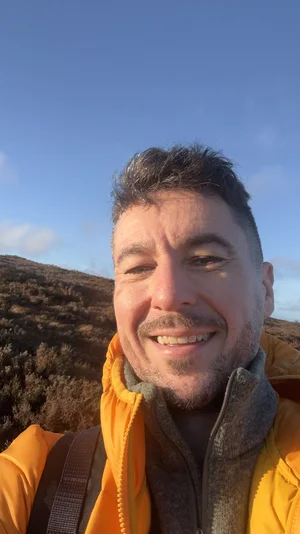
There's a moment on the Beara Peninsula, somewhere between Castletownbere and Allihies, where you realise you haven't seen another person in hours. The trail drops down through old copper mining country, past ruins that the land is slowly reclaiming, and the only sounds are wind, sheep, and your own breathing. It's the kind of quiet that feels almost physical - a weight lifting off your shoulders you didn't know you were carrying.
The Beara Way became one of the most meaningful trails I've filmed, and I think that's because it asks something of you. This isn't a trail you breeze through. It's rough in places, boggy in others, and the weather does what it wants regardless of your plans. But there's a reward in that. The peninsula gives you something in exchange for the effort - views that stop you mid-step, villages painted in colours that seem impossible against grey skies, and a pace of life that feels like it belongs to a different century.
Trail Facts & Stats
Distance: 206 km (Complete Loop)
Duration: 7 – 9 Days
Start/End: Glengarriff or Kenmare (Circular Route)
Difficulty: Strenuous (Frequent elevation changes and boggy terrain)
Key Towns: Castletownbere, Allihies, Eyeries, Kenmare.
Best Time: May – September (Open year-round but boggy in winter).
What is the Beara Way?
The Beara Way runs approximately 200 kilometres around one of Ireland's quieter peninsulas, tucked between the more famous Kerry Way to the north and the Sheep's Head Way to the south. It starts and ends in Glengarriff, looping through Adrigole, Castletownbere, Allihies, Eyeries, and Kenmare. You can walk it in around nine days if you're moving with purpose, though I'd argue the Beara resists that kind of efficiency. I started and finished in Kenmare - this felt like the best place to really start, as you begin the Way on a long road section full of energy, and finish on a mountain stage full of heart.
What struck me most while filming was how the landscape keeps changing. One hour you're on a grassy ridge looking down at Bantry Bay, the next you're navigating a rocky boreen that probably hasn't changed since famine times. The trail takes you through working farmland where sheep scatter at your approach, past standing stones that predate written history, and along stretches of coast where the Atlantic makes its presence known.
I found myself stopping constantly - not because I was tired, though I was, but because the views demanded it. There's something about the light on the Beara that I haven't experienced anywhere else in Ireland. The peninsula catches weather coming off the Atlantic, and the sky is rarely still. Shafts of sunlight break through clouds, illuminate a distant hillside for thirty seconds, then vanish. If you're not watching, you miss it.
The Route & Typical Stages
While you can start anywhere, most walkers tackle the route in 7 to 9 stages. Here is the classic breakdown:
Glengarriff to Adrigole (16km)
Adrigole to Castletownbere (22km)
Castletownbere to Allihies (15km)
Allihies to Eyeries (12km)
Eyeries to Lauragh (27km)
Lauragh to Kenmare (24km)
Kenmare to Bunane (via the Old Kenmare Road)
Bunane to Glengarriff (Completing the loop)
The Legend of the Hag of Beara
You can't walk this peninsula without encountering the Cailleach Bhéarra - the Hag of Beara. She's one of the oldest figures in Irish mythology, a goddess associated with the land itself, said to have shaped the mountains and controlled the seasons. There's a rock formation near Eyeries that bears her name, though the stories about her stretch far beyond any single landmark.
What I find compelling about the Cailleach is that she's not a gentle figure. She's ancient, weathered, associated with winter and harsh terrain. Walking the Beara, you understand why she belongs here. This landscape doesn't coddle you. The wind can be brutal, the rain horizontal, the paths unforgiving. But there's a kind of honesty in that. The land is what it is, and you meet it on its terms.
I tried to bring some of that feeling into the films I made here. Not romanticising the difficulty, but not hiding from it either. The Beara Way earns its reputation as one of Ireland's wilder trails, and that wildness is precisely what makes it worth walking.
Dursey Island Cable Car
If you have the time (and I'd strongly encourage making the time) take the cable car to Dursey Island. It's Ireland's only cable car, a rattling contraption that carries you across the sound to an island with more sheep than people. The western tip of Dursey feels like the edge of everything, the last scrap of land before the Atlantic stretches unbroken to America.
I spent a full day filming on Dursey, and it remains one of my favourite memories from the entire project. The island has a quiet that goes beyond the absence of noise. There's a signal tower from the Napoleonic era, ruins of old settlements, and paths that wander toward cliffs where gannets wheel overhead. Standing at the western point, watching the sea move, I felt the kind of stillness I'm always chasing in this work.
Logistics: Accommodation & Baggage
I walked the Beara Way with support from Tailor-Made Tours, who handled logistics. This is crucial on the Beara because:
Accommodation is sparse: B&Bs are not around every corner. You need to book ahead.
The Terrain is Tough: Having baggage transfer makes the long days (especially the Eyeries to Lauragh stretch) much more manageable.
The films I made from the Beara have become some of my longest and most immersive. That wasn't a conscious choice so much as a response to the trail itself. The Beara Way takes time. It doesn't compress well into highlights. So the films breathe the way the walking does - long stretches of landscape, natural sound, the rhythm of footsteps on stone.
Walking It Yourself
If you're considering hiking the Beara Way yourself, a few things worth knowing.
The trail is quieter than the Kerry Way or Dingle Way. You won't encounter crowds, but you also won't find as much infrastructure. Some stages are long, and accommodation options can be limited, so booking ahead is essential. The waymarking is generally good, though there are stretches where attention is required, particularly on the mountain sections.
Weather is a constant consideration. The Beara catches Atlantic systems head-on, and four seasons in a day is genuinely possible. Waterproofs aren't optional, and neither are layers. I've been soaked to the skin and sunburned on the same trip.
The villages along the way are welcoming in the understated way of rural Ireland. Castletownbere has a working fishing harbour and good pubs. Eyeries and Allihies are picture-postcard colourful. Kenmare, where many itineraries end, is a proper foodie town with excellent restaurants.
Why walk the Beara Way?
I've walked a lot of Irish trails at this point. Each has its character, its particular gift. The Beara's gift is space - physical space on an uncrowded trail, mental space in landscapes that demand nothing from you except presence.
There's a section on the third day, climbing up from Adrigole toward the Caha Mountains, where you can see both coasts of the peninsula simultaneously. Bantry Bay to the south, the Kenmare River to the north, and you standing on the spine of land between them. It's one of those views that makes the slog worthwhile. Not Instagram-pretty in any obvious way, just quietly immense.
That's the Beara Way. Quietly immense. It doesn't shout. It doesn't need to. If you're willing to meet it where it is - slow, rough, honest - it gives you something that lasts..
I hope these films can be a doorway into that experience. And if they inspire you to walk it yourself someday, I'd love to hear how it goes.
Watch the full Beara Way video on my YouTube channel.